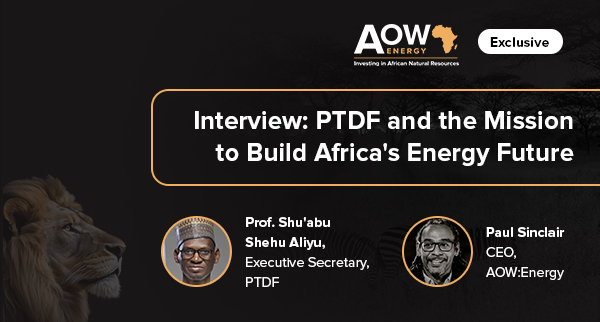
PTDF and the Mission to Build Africa’s Energy Future
Share:
Interview: PTDF and the Mission to Build Africa’s Energy Future
Theme 1 — The PTDF Story: Building the Foundation for a National Energy Champion
Q1. What do you consider PTDF’s defining achievements — the ones that fundamentally changed the industry’s human-capital landscape?
Before the establishment of the PTDF, Nigeria lacked expertise in the petroleum industry, particularly in the areas of reservoir engineering and geoscience. Today, however, Nigerians who have been trained by the PTDF are stepping into these critical roles. We have successfully filled the capacity gap and produced skilled professionals who are actively participating in this vital industry, and we take immense pride in this transformation. The scholarships we offer are the most visible aspect of our efforts. However, our impact goes much deeper. We have created a pipeline of Nigerians who have received world-class training, returned home, and become supervisors, lecturers, and entrepreneurs. Our alumni are now making significant contributions in decision-making positions across the sector, effectively transforming the landscape of the industry.
Q2. Nigeria once depended heavily on imported expertise and technology. How different does the industry look today, and what role has PTDF played?
The contrast is remarkable. In the past, major projects required us to seek foreign expertise at great expense, with Nigerians merely observing and assisting. Today, however, Nigerians are at the forefront, designing, leading, and taking charge of these projects. While the PTDF has played a significant role in this transformation, it is important to note that it did not do so alone. The contributions of the industry, universities, and regulators have also been essential to this progress.
Our training methods have evolved significantly. We no longer send our best talents abroad, resulting in a loss of talent. Now, our PhD candidates divide their time between our university in Kaduna and partner universities overseas. This approach allows research capabilities to remain in Nigerian laboratories, rather than departing with graduates. This is a quiet revolution: we have stopped exporting our talent and started building the institutions necessary to retain it.
Q3. Looking to the future, what fundamental milestones should PTDF achieve, and how will they act as a cornerstone for future development?
Our key milestones focus on depth rather than quantity. We aim to transform our Centres of Excellence in Kaduna and Port Harcourt into institutions that will serve the West African sub- region and the entire African continent. Furthermore, we are shifting our approach from merely training technology users to nurturing innovators who can develop their own tools, patents, and solutions. Additionally, we plan to fully integrate energy transition and digital skills, ensuring that Nigerian graduates are proficient in both gas plant operations and carbon capture techniques. This integration will provide a comprehensive skill set for the industry. When a country masters its expertise, it gains control over its future. This is the real milestone.
Theme 2 — Capacity Development in an Era of Energy Transformation
Q1. Many countries talk about local content; PTDF focuses on local capability. What is the difference, and why is capability the more strategic objective?
At its core, having a Nigerian implement a contract may define ‘local content,’ but ‘local capability’ refers to a Nigerian who can deliver work that meets international standards. This distinction emphasizes our priority in building capability. While laws can mandate local content, developing genuine capability requires a long-term, sustained effort.
For instance, a project may require that a portion of the work be assigned to local firms. However, if those firms lack the necessary skills, this merely shifts reliance without eliminating it. Our larger challenge is to ensure that local capabilities are established when opportunities arise. Without the required capacity, focusing solely on content becomes merely about meeting quotas; true sovereignty relies on capability.
Q2. As AI, digital subsurface modelling, automation and advanced engineering reshape the sector, how is PTDF preparing young leaders for jobs that didn’t exist a decade ago?
PTDF deliberately and swiftly developed a strategy framework to align with the emerging priorities and shifts, such as the energy transition, renewables, climate change, and artificial intelligence, in our international scholarships and skills development programmes. This isn’t just superficial; it shapes which students we fund and what they study. We’ve also incorporated specialised training in AI, robotics, and machine learning, reflecting that today’s engineers will work as much with data and models as with physical hardware. Therefore, we’ve shifted from predictable, specific jobs to fostering adaptable minds people who understand fundamental principles but are comfortable with constantly evolving tools. Our goal is to prepare them not just for today’s jobs but for a series of careers we can’t yet predict.
Q3. What skills will define the most successful African energy professionals over the next twenty years?
In the coming decades, professionals in Africa will have the ability to bridge the physical and digital realms, understanding both the resources available and the algorithms that describe them. Adaptability will be essential; relying on a single fixed skill can lead to obsolescence and limit one’s ability to lead and innovate. Technical expertise alone has its limitations if it fails to inspire others. The leading energy professional in Africa in the next twenty years will not only be an outstanding engineer; they will also be someone who can establish institutions, mentor teams, and confidently address challenges that are not covered in textbooks.
Theme 3 — Beyond Scholarships: Developing a knowledge economy
Q1. What do people most frequently misunderstand about PTDF’s true mission, and which part of the vision is most important to you and why?
A common misconception is that we are primarily a scholarship awarding institution. Since scholarships are the most visible aspect of our work, many people believe they define our entire mission. However, our ultimate goal is to develop the technological expertise and infrastructure of the energy sector. This includes capacity building, research, universities and laboratories upgrade, and enhancing and operationalizing our centers of excellence. The part of our vision that resonates with me the most is often the least noticed: systems strengthening. Although each scholar we train is an exceptional individual, it is the institutional systems strengthening that allows us to create lasting frameworks. This enables us to train thousands of individuals. If I care about leaving a legacy, it is to strengthen our institutions for a greater impact on the lives of Nigerians.
Q2. How important is research and innovation if Africa is to move from being a resource producer to a developer of technology, IP and energy solutions?
It is clear that research and innovation are fundamental to the development of any nation. Africa has continued to rely on resource extraction and exports, sending raw materials to those who transform them into technology. We sell our resources and then buy advanced solutions, software, and services at significantly higher costs. To break this cycle, progress through research and innovation is essential. We need to shift from generating rental income from underground resources to reaping rewards from human ingenuity. The latter approach is much more sustainable: while oil reserves will eventually dwindle, human creativity knows no bounds. If Africa genuinely cares about its future, investing in research should not be seen as a luxury for prosperous times. Instead, it should be viewed as the most crucial strategic investment we can make.
Q3. What does success look like — more graduates, or more African-developed technologies deployed — and how will you measure it across the short, mid and long term?
The institutional capabilities of African technologies and innovations have evolved over time. In the short term, we assess success using traditional metrics, such as the number of well- trained individuals entering the workforce and their retention rates. In the medium term, our focus shifts to our Centres of Excellence, which are expected to generate research that can be implemented by industry, while also enhancing the reputation of our institutions. Ultimately, the true long-term measure of success is the deployment of technologies developed in Africa. across various sectors, with solutions that reflect our unique contributions. Graduates serve as the output of this system, while the deployment of innovation represents the outcome. Initially, we measure success by the number of individuals trained; over time, we will track patents, products, and problems that are solved.
Theme 4 — Future Leadership and Building the Next Generation
Q1. Is enough being done to prepare the next generation of energy leaders, and what are you doing differently to maximise that outcome?
At the PTDF, we are making steady progress in the right direction. Developing the next generation of energy leaders requires intentional effort. While PTDF has already played a role in creating a capable first wave of Nigerian experts, the real challenge lies in ensuring that this knowledge is effectively transferred, expanded upon, and embedded within institutions before it is lost due to retirement or migration.
Our approach is distinctive as we deliberately design the transition mechanism for the next generation of leaders in the energy sector. The split-site model keeps senior academics and professionals engaged with Nigerian institutions while facilitating collaboration with younger researchers. Our Centres of Excellence aim to unite experienced scientists, lecturers, and emerging talents within the same laboratories and research settings. This structure enables the next generation to learn not only from textbooks or formal training but also through direct mentorship, supervision, and hands-on experience. Our goal is not just to train individuals but to establish a system that transmits knowledge across generations and integrates into Nigerian institutions. This approach maximizes impact by transforming personal expertise into sustainable national capabilities.
Q2. What qualities separate future industry leaders from future industry participants?
A leader is responsible for providing overall oversight while ensuring that participants can effectively perform their tasks. Importantly, a leader takes accountability for all aspects of a situation, even those they weren’t directly assigned. This distinction is crucial: participants typically wait for instructions, whereas leaders proactively identify needs and take ownership of their responsibilities. Leaders are evaluated based on the people they develop, not just their personal accomplishments. Someone who hoards knowledge may excel as a participant but will never become a true leader.
In a rapidly changing sector, it is essential to maintain a willingness to learn. Leaders should be able to admit, “I don’t know that yet,” and then strive to master new skills. Participants often believe they have reached a sufficient level of competence, while leaders understand that their development is an ongoing journey.
Q3. If you could give one piece of advice to a young African engineer, geoscientist or energy entrepreneur, what would it be?
Develop essential skills that are recognized worldwide and bring that expertise back to your home country. Strive to be so skilled that your abilities, rather than your passport, make the first impression. Intentionally dedicate your talent to your continent, as talent migration is a loss we can least afford. Perfect your craft with the goal of cultivating it locally.
Theme 5 — Can Africa Drive Its Own Energy Destiny?
Q1. Are we now entering an era where African institutions, expertise and leadership can define their own development pathway? Give an example of PTDF’s role and a success story.
For a long time, external forces shaped the continent’s energy agenda, and we were often asked to accept it without question. However, this is changing as African institutions have gained the expertise to engage confidently in these discussions. The role of the PTDF is clear: every scholar we educate and every laboratory we establish enhances our position, making it increasingly difficult to justify decisions driven by outside interests. A major milestone in PTDF’s evolution is the establishment of two flagship centres of excellence, which now form the backbone of its institutional capacity-building strategy.
The Centre for Skills Development and Training, Port Harcourt, is designed to provide world-class vocational and technical education for technicians, artisans and craftsmen across the upstream, midstream and downstream sectors. The centre offers internationally recognized certifications in areas such as welding, fabrication, instrumentation, offshore safety and other specialized disciplines. The second flagship institution, the General Shehu Musa Yar’Adua University of Geological Sciences and Engineering Technology, Kaduna, is PTDF’s degree-awarding institution.
Formerly the College of Petroleum and Energy Studies now delivers postgraduate education, advanced research and the Split-Site PhD Programme through partnerships with leading universities in the United Kingdom. Together, these centres enable PTDF to deliver internationally competitive education and training within Nigeria, thereby reducing dependence on overseas institutions while retaining expertise and investment within the country.
Q2. What will it take for Africa to be recognised not only for its resources, but for its human capital, innovation and technical excellence — and what are you doing to contribute?
Currently, Africa is recognised for its existing resources and strengths; in the future, it must be acknowledged for its potential. This means showcasing tangible excellence: research that garners global attention, professionals recruited worldwide, and institutions that form genuine partnerships on equal footing. Our role is to cultivate and consistently demonstrate this excellence over time.
Our Kaduna University is increasingly recognised as a valuable partner for foreign universities, with some already collaborating through our split-site model. This signifies the beginning of wider acknowledgement. PTDF is collaborating with Independent Petroleum Producers Group, the African Petroleum Producers’ Organization (APPO), Sonatrach from Algeria, Saudi ARAMCO, and Turkey Petroleum to enhance knowledge transfer and capabilities through training, joint research, and innovation.
Q3. How important are institutions like PTDF in ensuring Africa’s energy future is designed, managed and delivered by Africans?
Indispensable, and I emphasise that sincerely. Individual talent matters, but people can leave, retire, or be recruited away. Institutions, however, are what stand the test of time. For Africa’s energy future to be truly shaped and managed by Africans, it will depend on institutions like this that consistently prioritise developing the right talent year after year, regardless of leadership changes.
An institution’s true strength lies in its capacity to persist beyond individual personalities. In the end, a strong PTDF acts as a safeguard, ensuring that the knowledge required to manage
Africa’s energy sector remains within African expertise.
Theme 6 — Nigeria’s Role in Africa’s Energy Future
Q1. How can Nigeria leverage its concentration of energy talent to become a regional hub
For knowledge, training, and technical excellence, Nigeria stands out as a unique asset on the continent due to its high density of skilled professionals. It has a significant concentration of engineers, geoscientists, institutions, and industry experience that few neighboring countries can match. The strategic approach is to recognize this not only as a national resource but as a continental one. Our Centres of Excellence should include participants from West Africa and, eventually, all of Africa. We can share our scholarship models and curricula, fostering collaboration.
By actively engaging across borders and participating in APPO platforms alongside other oil- producing nations, we lay the groundwork for this expansion. If Nigeria develops its energy professionals to the same level as those in countries renowned for their expertise in medicine or engineering, it will not only support its neighboring countries but also become indispensable itself. A hub for excellence isn’t simply declared; it is established through consistent effort and by becoming the preferred destination for learning.
Q2. Does African energy talent remain one of the continent’s most undervalued strategic assets, and how do you build a region-wide strategy around it?
We spend too much time debating oil ownership and not enough on empowering the people who can transform it into something more meaningful. A comprehensive regional strategy should focus on the understanding that talent, rather than crude oil, is the resource that truly multiplies over time.
This strategy involves establishing common training standards, enabling professional mobility across African borders, creating joint centers of excellence, and consolidating top institutions rather than allowing each country to develop its own less effective versions. While our current efforts through our own centers and collaborations with producing nations are a good start, this approach needs to evolve into a continental initiative. It should not be viewed as merely a favor from Nigeria; rather, Nigeria is well positioned to lead and facilitate this effort.
Q3. What responsibility does Nigeria have in helping develop energy capability across the wider African continent?
This is genuinely driven by capacity, not charity. The more resources you have, the more responsibility you bear. Nigeria boasts the largest energy talent pool in the continent and some of its strongest institutions, which creates an obligation to open doors instead of shutting them.
This approach does not involve giving anything away; rather, it is ultimately in our best interest.
A stronger regional energy sector translates to a larger market, a more stable neighborhood, and a more influential collective African voice on the global stage.
When we extend our training initiatives or share our achievements internationally, it’s not merely an act of generosity; it’s a strategic decision. Countries that invest in their regional development often emerge as leaders.
PTDF’s long-term vision is to develop a workforce that is trained in Nigeria, employed in Nigeria, and, by choice, exported to serve the broader African energy industry. By integrating human capital development, institutional strengthening, research, industry partnerships, and workforce planning, the Fund is creating an ecosystem that supports innovation, employment, and economic competitiveness.
Its strategic focus on local training, digital and AI readiness, research commercialisation, and workforce placement positions PTDF to play a leading role in developing Nigeria’s future energy workforce and advancing the country’s leadership in the regional energy sector.